
Why I’m 40 Hours Into a Fast - And What It Teaches Us About Health
Hi everyone,
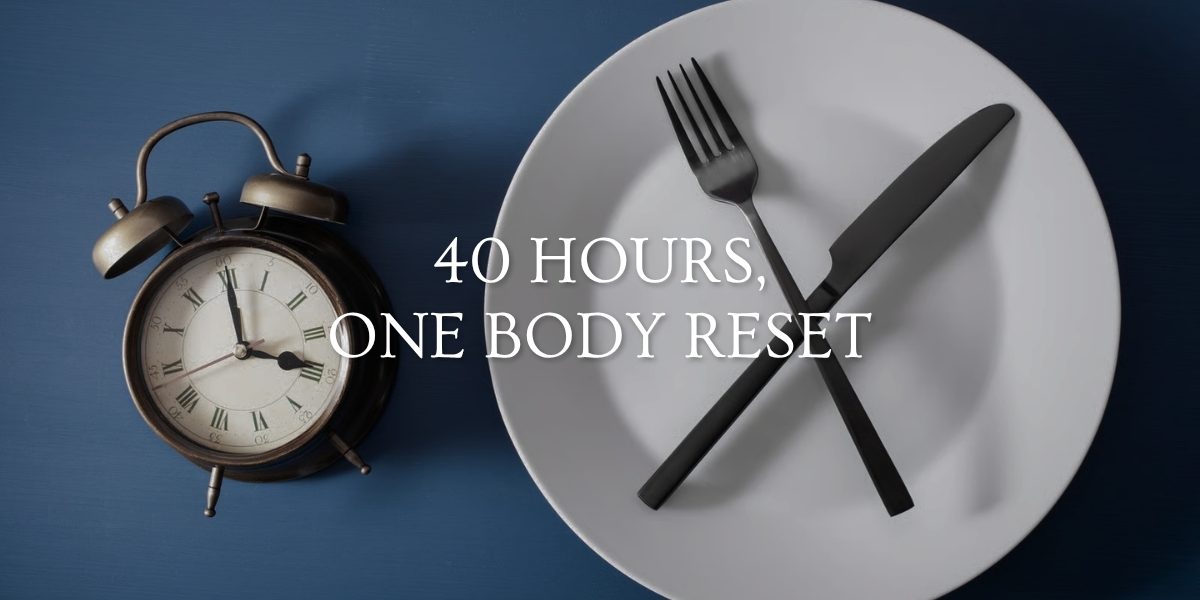
As I write this, I’m approaching the end of a 40-hour fast.
That might sound unusual at first, especially in a world where we’re constantly surrounded by snacks, quick meals, and messages telling us we should eat more often to “keep our energy up.”
But fasting isn’t about punishment, deprivation, or chasing extremes.
For me, it’s about giving the body a chance to reset.
Over the years, both as a doctor and someone deeply interested in preventative health and healthy ageing, I’ve become increasingly fascinated by the idea that when we eat may be almost as important as what we eat.
Periods without food trigger a range of natural processes that humans evolved with over thousands of years, helping the body shift from constant storage mode into repair and renewal mode.
Many people notice benefits such as:
– Improved energy and mental clarity
– Better control of appetite and cravings
– Improvements in blood sugar and insulin sensitivity
– Reduced inflammation
– Weight loss, particularly around the waist
– Better awareness of the difference between true hunger and habit eating
Research is also exploring how fasting may support cellular repair processes linked to healthy ageing and metabolic health.
Importantly, fasting doesn’t need to mean going days without food. Even simple changes, such as avoiding late-night eating or extending the overnight fasting window, can have meaningful effects.
This isn’t about perfection or strict rules.
It’s about understanding how the body works and using simple, practical tools to improve long-term health before problems develop.
Over the coming weeks, I’d like to share more about:
– Different types of fasting
– Who may benefit (and who should avoid it)
– The science behind fasting and metabolism
– Common myths and misconceptions
– Safe and sustainable ways to get started
Because good health isn’t just about treating disease once it appears.
It’s about creating the conditions that help the body stay healthy for as long as possible.
Dr Julian Fox
The Possibility Coach